
Blue Moonstone in Sri Lanka: Mining, Quality and Meetiyagoda

Updated: Sep 21
Blue moonstone in Sri Lanka is especially associated with Meetiyagoda, a village in the south-west of the island with a long history of small-scale moonstone mining. The finest examples appear almost colourless until light moves across the surface and reveals a floating blue glow. This optical effect, known as adularescence, gives blue moonstone its unmistakable appearance.
Meetiyagoda has sometimes been described as the world’s only source of blue moonstone. That is not accurate. Moonstone occurs in several countries, but Sri Lanka remains particularly renowned for transparent material displaying a strong blue sheen.

What Is Blue Moonstone?
Blue moonstone belongs to the feldspar family. The word “blue” generally describes the moving blue adularescence rather than the gemstone’s underlying body colour.
The Gemological Institute of America’s moonstone guide explains that moonstone’s glow is created when light scatters between microscopic layers within its structure. As the gemstone or light source moves, the sheen appears to float across the stone.
Fine blue moonstone typically displays:
a colourless or nearly colourless body;
good transparency;
a distinct blue sheen;
adularescence visible across a wide viewing range;
few distracting inclusions; and
a well-oriented cut that centres the optical effect.
A stone can be attractive without meeting every one of these criteria, but the strongest combination is considerably harder to find.
Why Is Blue Moonstone in Sri Lanka Associated With Meetiyagoda?
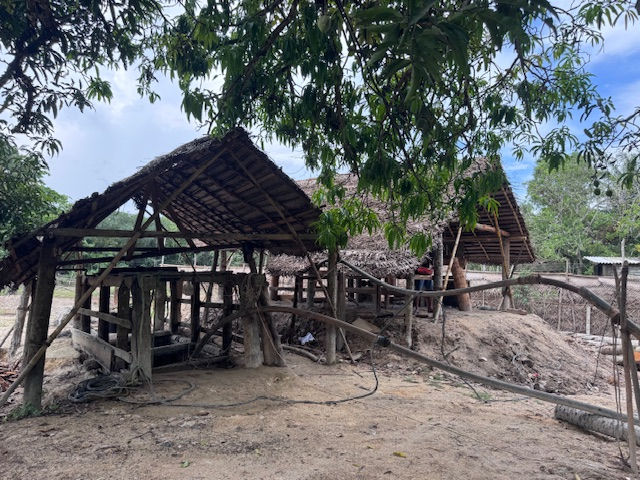
Meetiyagoda is one of Sri Lanka’s best-known moonstone-producing areas. Mining developed across different family-owned plots, shafts and small workings rather than around one single mine.
This helps explain why visitors encounter several numbered moonstone sites. Some preserve genuine mining heritage and demonstrate traditional methods, while others are connected with former or current mining areas.
After visiting Meetiyagoda several times, I discovered an important distinction between roadside visitor sites and privately operated active mining land. The visitor sites provide a useful introduction, but they do not always represent the full reality of current extraction.
You can read what I found in my detailed field report about the Meetiyagoda moonstone mines beyond the tourist sites.
How Blue Moonstone Is Mined in Sri Lanka
Mining methods and conditions vary between sites, but traditional moonstone extraction in Meetiyagoda remains small-scale and physically demanding.
Miners may:
Sink a shaft through the upper layers of soil.
Support the shaft with locally available timber, traditionally including coconut wood.
Pump out water as the shaft deepens.
Work towards gem-bearing material.
Raise excavated earth and gravel in buckets.
Wash and sort the material to search for moonstone.
Send suitable rough material for cutting and polishing.
A shaft can require months of work without producing valuable gemstone material. Timber supports also deteriorate, meaning a shaft may eventually need to be closed and another opened nearby.
Not every mine site presented to visitors is actively producing moonstone. Some former shafts now serve an educational or heritage role, helping visitors understand how mining traditionally worked.
What Creates Moonstone’s Blue Adularescence?
Moonstone’s blue glow is not a surface coating or a pool of colour inside the gemstone. It is an optical effect created by light interacting with extremely fine internal layers.
The strength and appearance of the adularescence depend on the stone’s structure and how the rough has been oriented during cutting.
The cutter must position the stone carefully so that the blue sheen sits prominently across the top of the finished cabochon. Poor orientation can leave the effect weak, off-centre or visible only from a restricted angle.
This is why two pieces of rough from the same mining area can look very different after cutting.
How Is Blue Moonstone Cut?
Blue moonstone is most commonly cut as a cabochon: a polished stone with a smooth, domed surface and a flat or gently curved base.
The dome allows the adularescence to travel across the stone as it moves. A cabochon that is too flat or incorrectly oriented may fail to show the optical effect properly.
Although some moonstones are faceted, the traditional cabochon remains particularly effective for displaying a strong blue sheen.

What Determines Blue Moonstone Quality?
Strength and colour of the sheen
A vivid blue sheen is generally more desirable than a weak white or silvery effect. It should appear distinct rather than cloudy or diffuse.
Movement and coverage
The sheen should move smoothly across the gemstone and remain visible from a useful range of angles. A flash visible from only one precise position is less desirable.
Body colour and transparency
Fine blue moonstone usually has a colourless or nearly colourless body with good transparency. Yellow, brown or greenish body colour may reduce the visual impact of the blue effect.
Clarity
Heavy inclusions and fractures can interrupt the adularescence or weaken the stone. Moonstone may contain characteristic internal features, so complete clarity should not be assumed.
Cut and orientation
The quality of the cutting has a significant influence on appearance. The cabochon should be symmetrical, properly proportioned and oriented to display the sheen centrally.
Size
Fine transparent material with vivid blue adularescence becomes more difficult to find in larger sizes. Size alone, however, does not compensate for weak sheen, poor clarity or an unattractive cut. The GIA moonstone quality factors provide further guidance on colour, clarity, cut and carat weight.
Is Blue Moonstone the Same as Rainbow Moonstone?
No. The names are often used interchangeably in retail descriptions, but they do not refer to exactly the same gem material.
Traditional moonstone is associated with intergrowths of orthoclase and albite feldspar. “Rainbow moonstone” is a trade name generally applied to transparent labradorite that displays multicoloured iridescence.
Both belong to the feldspar family and can be beautiful, but their identity and optical appearance differ. The Gem-A guide to moonstone and adularescence explains this distinction in greater detail.
Ask a seller to state the gemmological identity rather than relying only on a commercial name.
What to Check Before Buying Sri Lankan Blue Moonstone
Examine the moving sheen
Move the stone slowly under diffused daylight or a neutral light source. Check whether the blue effect moves across the stone, remains centred and can be seen from several angles.
Look beyond strong shop lighting
Concentrated spotlights can make a gemstone appear more dramatic. Examine it in more than one lighting condition and avoid judging it solely under a seller’s display lamps.
Inspect the surface and interior
Look for chips, surface-reaching fractures, scratches and inclusions that interrupt the sheen. Pay particular attention around the edge of the cabochon and any drilled areas.
Ask how the origin was established
A seller’s statement that a stone came from Meetiyagoda is not independent proof of origin. Ask what documentation or supply history supports the claim, particularly when origin is being used to justify a higher price.
Confirm what is actually being sold
Ask whether the gemstone is moonstone, rainbow moonstone or another feldspar material. For an important purchase, consider independent gemmological identification.
Compare quality, not just size
A smaller stone with vivid, well-centred adularescence may be more desirable than a larger example with cloudy transparency or a weak flash.
Use my free Gemstone Buying Checklist before committing to a purchase.
Is Moonstone Suitable for Everyday Jewellery?
Moonstone measures approximately 6 to 6.5 on the Mohs hardness scale, but hardness is not the only durability consideration. It has cleavage directions and poor toughness, so a hard knock can cause damage.
Protective settings are sensible, particularly for rings. Pendants, earrings and brooches are less exposed to knocks during normal wear.
According to the GIA moonstone care guide, moonstone should be cleaned with warm, soapy water. Ultrasonic and steam cleaners are not recommended.
Frequently Asked Questions About Sri Lankan Blue Moonstone
Is blue moonstone naturally blue?
The gemstone’s body is usually colourless or nearly colourless. The blue appearance comes from adularescence, an optical effect that moves as the stone or light source changes position.
Is blue moonstone found only in Sri Lanka?
No. Moonstone occurs in several countries. Sri Lanka is particularly respected for fine transparent material with vivid blue adularescence, and Meetiyagoda is one of its best-known sources.
Are the Meetiyagoda tourist mines still active?
Some visitor sites preserve former shafts or demonstrate traditional mining methods. Active mining also continues on a limited scale in privately operated areas, but working shafts are not generally public attractions.
Can visitors enter an active moonstone mine?
Active shafts are privately controlled and safety-sensitive. Access depends on ownership, conditions and permission and should never be assumed.
Why is blue moonstone usually cut as a cabochon?
The domed cabochon shape helps display the moving adularescence. Correct orientation is essential because the optical effect can be weakened or lost through poor cutting.
How much is Sri Lankan blue moonstone worth?
There is no single price. Value depends on the strength and colour of the adularescence, transparency, clarity, cut, size, condition and the evidence supporting any origin claim.
Seeing Sri Lanka’s Gemstone Trade Beyond the Showroom
Meetiyagoda demonstrates why understanding a gemstone requires more than admiring the finished stone. Mining conditions, cutting decisions, local knowledge and the evidence behind an origin story all matter.
My private Sri Lanka Gemstone Experiences introduce guests to the people, places and processes behind the island’s gemstone trade. Mine and workshop access always depends on local permission, working conditions and safety.
Kim Rix GG GIA
Independent Gemstone Sourcing Specialist
Gemstone Detective


