Cuprian Tourmaline Heat Treatment: When a Genuine GIA Report No Longer Tells the Whole Story

A GIA case involving cuprian tourmaline heat treatment shows how a genuine laboratory report can stop describing a gemstone’s current condition if the stone is altered after testing.
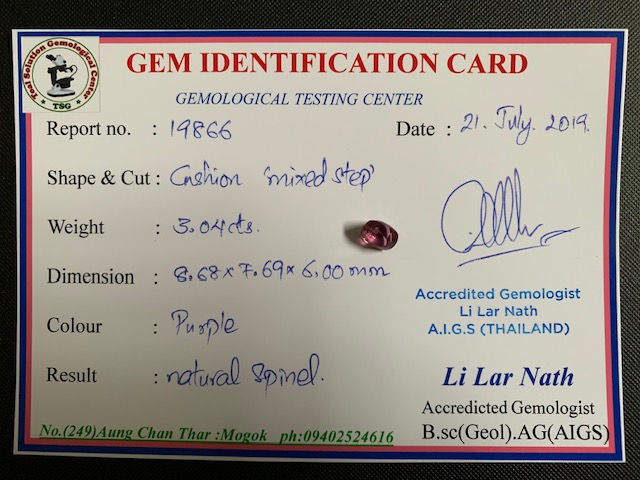
An authentic gemstone report can tell us a great deal about a stone. But it only records what the laboratory found on the date of examination.
That distinction matters.
The Gemological Institute of America recently re-examined a cuprian, or copper-bearing, tourmaline that it had previously tested in 2023. The report was genuine and the gemstone was the same stone. Yet its colour and spectral characteristics had changed, and GIA found evidence suggesting that it had been heat-treated after the first examination.
This is not a story about a fake report or a substituted gemstone. It is a reminder that even authentic documentation can become incomplete when a gemstone is altered after testing.

The short answer
A gemstone report describes the stone as it appeared when the laboratory examined it. It is not a permanent guarantee that the gemstone will remain in the same condition.
If a stone is subsequently heated, filled, coated, recut or otherwise altered, an older report may still be authentic while no longer providing a complete description of the gemstone being offered for sale.
What the Cuprian Tourmaline Heat Treatment Case Revealed
The cuprian tourmaline heat treatment case involved a 0.64-carat pear-shaped gemstone examined by GIA in 2023 and again in 2026.
What was discovered?
GIA’s Tokyo laboratory examined a 0.64-carat pear-shaped cuprian tourmaline. Cuprian simply means that copper is present and contributes to the gemstone’s colour.
The stone matched a gemstone previously examined by GIA’s Bangkok laboratory in 2023. Its identity was confirmed by comparing its weight, dimensions, facet arrangement, trace-element chemistry and microscopic features with the archived laboratory information.
It was the same gemstone, but it no longer looked the same.
The tourmaline had been described as blue in 2023. When it returned in 2026, its colour was greenish blue.
How did GIA reach its conclusions?
GIA compared analytical information collected during both examinations.
Ultraviolet, visible and near-infrared spectroscopy, an analytical method that measures how a gemstone absorbs light, showed a significant difference. A broad absorption feature centred near 520 nanometres had been present in 2023 but was absent in 2026.
That feature was associated with manganese in a particular chemical state, known as Mn3+, which can add violet or purple components to the colour of cuprian tourmaline. Its disappearance corresponded with the gemstone’s change from blue to greenish blue.
During the 2026 examination, GIA also observed internal tension fractures around inclusions. These fractures had sharp, disc-like outlines consistent with structural stress.
The combination of the colour change, altered absorption spectrum and internal tension fractures was consistent with the effects of heat treatment. GIA therefore suggested that the stone had been heated after its 2023 examination.
Why is this important?
This case also shows why online report verification has limits. Confirming that a report number exists proves that the laboratory issued that report. It does not prove that the gemstone has remained unchanged since the examination. This is one reason buyers should understand exactly what a laboratory report can and cannot confirm.
You can read more in my guide: Can I trust a gemstone certificate?
Heat treatment does not make a natural tourmaline fake. Heating is used within the gemstone trade to alter or improve colour, and many treated gemstones are attractive and entirely suitable purchases.
The issue is disclosure.
Treatment status can affect how a gemstone is described, valued and compared with other stones. If an older report is presented without explaining that the gemstone was treated afterwards, the document may create a misleading impression even though the report itself is authentic.
This case also shows why online report verification has limits. Confirming that a report number exists proves that the laboratory issued that report. It does not prove that the gemstone has remained unchanged since the examination.
What does this mean when buying cuprian or Paraíba tourmaline?
Cuprian tourmaline can command substantial prices, particularly when it has vivid blue-to-green colour and qualifies for the trade designation Paraíba tourmaline.
Cuprian describes the presence of copper. It does not, by itself, establish geographic origin. Origin and treatment status are separate conclusions.
For a significant purchase, look at the date on the laboratory report and compare the current gemstone with any report photograph and description. A difference in colour may have an innocent explanation, including photography, lighting or viewing conditions, but it deserves investigation rather than assumption.
Ask the seller whether the stone has been treated, recut, repaired or resubmitted since the report was issued. Important representations should be recorded in writing on the invoice.
If the seller is relying on an older report to support a claim of no heat, or if the stone’s present appearance differs from the report, request a new examination by a reputable independent gemmological laboratory before paying.
The same principle applies beyond tourmaline. A laboratory report should be treated as a dated scientific record, not a lifetime guarantee of a gemstone’s condition.
What remains uncertain?
This was one laboratory case. It does not show that post-report treatment of cuprian tourmaline is widespread.
GIA did not state exactly when, where or by whom the apparent treatment was performed.
The laboratory also did not have photomicrographs from the 2023 examination, so the tension fractures observed in 2026 could not be directly compared with earlier images. They had simply not been recorded by the original gemmologists.
The evidence is therefore consistent with, and strongly suggests, heat treatment after the first examination. However, the treatment itself was not directly witnessed.
Read the original research
Changes in Cuprian Tourmaline Previously Examined by GIA — Yusuke Katsurada, Gems & Gemology, Fall 2026; published online 6 November 2026.
How to protect yourself when buying with an older gemstone report
Check the report directly with the issuing laboratory. Use the laboratory’s official verification service rather than a link supplied by the seller.
Read the examination date. A report describes the gemstone at that particular point in time.
Compare the physical stone with the report. Check the weight, dimensions, shape, cutting style, colour description, report photograph and any identifying features.
Ask what happened after testing. Establish whether the stone has since been treated, cleaned, filled, coated, recut, repaired or reset.
Put important claims in writing. The invoice should record the represented treatment status, natural or laboratory-grown identity and any stated geographic origin.
Request fresh testing when the value justifies it. This is especially important when the report is old, the chain of custody is unclear or the stone looks different from its report.
Remember what verification can and cannot prove. An online result can confirm that a report exists. It cannot confirm that the gemstone remains unchanged or, without physical comparison, that the report belongs to the stone in front of you.
If you have already found a significant gemstone and want an independent assessment before committing, you can read about my Buyer Protection service.
Frequently asked questions
Can a genuine gemstone report become outdated?
Yes. The report remains a genuine record of what the laboratory observed on the examination date. However, it may no longer describe the gemstone’s current condition if the stone is subsequently treated, recut, damaged, repaired or otherwise altered.
Does heat treatment make a tourmaline fake?
No. A heat-treated tourmaline is still a natural tourmaline, provided it formed naturally.
Treatment status and natural identity are separate facts. The treatment should be disclosed where it affects the description, care or value of the gemstone.
Can cuprian tourmaline be heat-treated?
Yes. Cuprian tourmaline heat treatment can reduce violet, purple or pink components in some copper-bearing stones and produce a bluer or greener appearance. In some cases, treatment may be difficult or impossible to detect conclusively.
Is every cuprian tourmaline a Paraíba tourmaline?
Not necessarily. Cuprian means copper-bearing. The Paraíba trade designation also depends on colour and chemical criteria applied by the laboratory.
It does not automatically mean that the gemstone came from Paraíba in Brazil, because qualifying material is also found in other countries. Geographic origin requires a separate laboratory opinion.
Does online report verification prove that the gemstone is unchanged?
No. It confirms that the report record exists and allows you to compare its details with the document presented.
It does not establish what may have happened to the gemstone after testing.
When should I request a new laboratory report?
Fresh testing is sensible when the gemstone is valuable, the report is several years old, the chain of custody is unclear, the stone’s appearance differs from the report or the seller is making a treatment claim that materially affects the price.
The important lesson from this edition
A genuine report and the correct gemstone are only two parts of the picture. The document must also describe the gemstone in its present condition.
Good gemstone buying is not about rejecting every treated stone or distrusting every older report. It is about understanding what the evidence establishes, recognising what may have changed and making sure the description and the price reflect the gemstone being offered today.
I work for the buyer - not the seller.