
Meetiyagoda Moonstone Mine Sri Lanka: What I learned beyond the Tourist Mines

When people search for Meetiyagoda Moonstone Mine in Sri Lanka, they usually imagine a single location where moonstone is mined and shown to visitors.
My experience was very different. After visiting the area multiple times over several years, I realised that what is presented to visitors is only one part of a much wider and more complex mining landscape.
There are numbered mine sites, family-owned plots, demonstration shafts and also privately operated active mining areas that are not visible to tourists. Understanding that difference completely changes how you see Meetiyagoda, and how you understand Sri Lankan Moonstone as a whole.
My visit revealed a side of Sri Lanka's moonstone industry that most visitors never see.
Why Are There Multiple Moonstone Mines in Meetiyagoda?
The short answer is that Meetiyagoda developed historically as a small mining landscape, not as one single mine.
Different shafts opened over time. Different family-owned plots evolved separately. Some mining land later became associated with visitor experiences, while other areas remained private or dormant.
That is why numbered mines such as Mine No.1, No.5, No.3 and Mine No.7 exist within the same village while representing different moments in moonstone history rather than identical active mining operations.
The numbering appears connected to a mixture of:
• historical shaft identity
• land ownership history
• local family development
• later visitor-facing naming
For someone arriving for the first time, this numbering easily creates the impression that every site is actively mining moonstone today. The reality is more complex which is why understanding buying gemstones safely at the source becomes so important.
What I Saw at a Roadside Moonstone Mine
I spent around an hour at one roadside site where the mining process was carefully explained.
I was shown:
• a shaft
• gemstone cutting equipment
• polished moonstones
• a variety of gemstones presented as having emerged locally
The experience was educational and helped explain how moonstone is introduced to visitors in Meetiyagoda.
What became clearer later is that these roadside mine sites often function as heritage spaces as much as mining spaces. They preserve visibility. They explain cutting. They keep the Moonstone identity accessible. That educational role matters because without these visitor-facing sites, many people would leave Meetiyagoda without understanding shaft mining at all.
The Difference Between Tourist Mine Sites and Active Moonstone Mining
Later that day, through a private introduction, I was taken to the original Meetiyagoda Moonstone Mine in Sri Lanka. This was not a visitor site. It was not being presented for tourism. It was active land, privately accessed through local relationships. That distinction matters because active gemstone mining in Sri Lanka remains highly relationship-based, small-scale, and carefully controlled.
The first thing I saw there was the remains of what I was told was the earliest original shaft.
That shaft had already been filled in, but the old coconut wood supports were left there as the only remaining evidence, covering the ground.

I was told it had once reached around 80 feet deep. That knowledge changed my understanding of Meetiyagoda entirely. The roadside story suddenly connected to a much older physical reality still present beneath the land.

Is Moonstone Still Actively Mined in Meetiyagoda?
Yes, but on a limited scale. The original mining field had later been divided into five plots.
Over time:
• different areas were mined
• some shafts were mined and then closed
• some plots remained dormant for decades
At present, there are only two active shafts on that original field. That means active moonstone mining continues, but in a far smaller and slower form than many people imagine. This is not continuous industrial extraction. It is selective, careful, and probably physically demanding.
How Deep Are Active Moonstone Mines in Sri Lanka?
One shaft I saw had already been stopped despite being only 18 months old because the coconut wood supports had deteriorated so badly. That detail reflects traditional shaft mining conditions in Sri Lanka, where coconut wood remains a practical support material but eventually weakens underground.
A second shaft had then been opened roughly ten feet away. At the time of my visit:
• It had been operating for six months, still very early days
• The depth had reached around 18 feet
• The plan is to continue toward approximately 60 feet
The target was the gem-bearing layer known locally as illam. No moonstone had yet been reached. That is a crucial part of gemstone reality: months of labour may pass before the first gemstone appears.
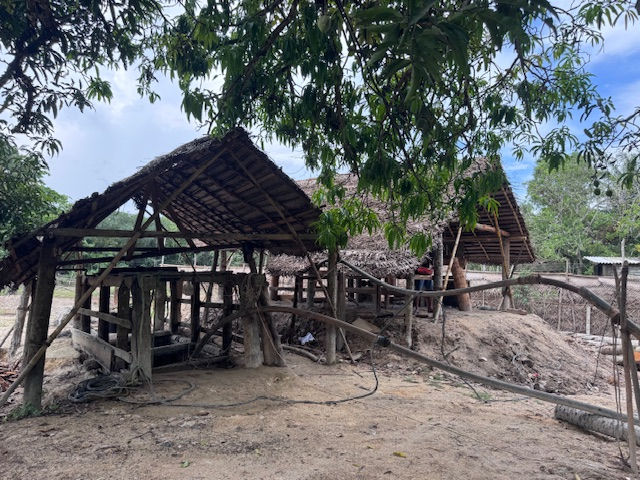
Why Active Moonstone Mines Are Not Open to Visitors
The active shafts I saw are not tourist attractions. I only visited because access was kindly arranged privately for me. This protects:
Safety - Working shafts are hazardous environments.
Ownership - Plots belong to specific families or companies.
Privacy - Mining relationships remain locally sensitive.
This is why most visitors experience roadside demonstration mines rather than active shafts. That distinction protects both heritage and working land. Now it was all beginning to make perfect sense.
Tourist Mine Sites vs Real Moonstone Mining in Sri Lanka
In Meetiyagoda, what visitors experience at roadside mine sites is only one layer of a much more complex mining landscape. Some sites are designed for demonstration and education, while others reflect older or less visible stages of actual extraction. Understanding this difference is essential when interpreting what you are being shown.
Are Roadside Moonstone Mines Real?
The answer is more nuanced and not a simple yes or no. Here's what I have learned:
Roadside mine sites in Meetiyagoda often preserve genuine mining heritage, but they do not always represent the full reality of current extraction. Some shafts may have been operational and are now be dormant. Some may function primarily as heritage demonstration spaces. Some might preserve family mining identity even when active extraction happens elsewhere.
That does not remove their educational value. It simply means they represent one visible side of a much larger mining story which also helps explain why gemstone prices vary so much.
Why Meetiyagoda Blue Moonstone Is Globally Important
Meetiyagoda remains internationally known for blue moonstone. The finest stones show a floating blue light across the dome of the gem. That optical effect is called Adularescence.
It occurs when light scatters internally through microscopic feldspar layers. But geology alone does not create beauty. The stone must be cut with exact orientation. A slight cutting error can remove the blue effect completely.
This means the value of Sri Lankan moonstone depends on:
• origin
• crystal quality
• cutting precision
The mine produces potential. The cutter reveals it.
What Meetiyagoda Taught Me About Gemstone Origin
The more I saw, the more sense it all made. And, as I asked more questions, the quicker I began to understand the real background.
From the main road, numbered mines look straightforward. On the ground, the story becomes layered:
• heritage
• family land
• dormant shafts
• private access
• active small-scale mining
• gemstone identity
This is why origin matters. Not because it confirms what we expect, but because it often reveals something more complex than what's visible at first sight.
Why This Matters for Buying Gemstones
Understanding the origin changes how gemstones are valued. A gemstone is never only a finished object.
It also carries:
• extraction conditions
• local history
• ownership systems
• cutting decisions
• trust networks
That is particularly true in Sri Lanka, where the gemstone trade is deeply relationship-based.
What I came to understand is that Meetiyagoda seems to hold both a historically important original mining field and a wider landscape where different shafts, family plots and visitor sites have developed over time.
The more time I spend here in Sri Lanka, the more I realise gemstone stories are rarely linear. They tend to reveal themselves gradually, often through little details that, at first, seem insignificant...a roadside sign, a shaft number, a quiet conversation, a phone call, and an old shaft beneath dormant land.
And when you connect the dots, the wider story begins to make sense.
This reflection is drawn from my personal experience exploring Meetiyagoda’s mining heritage. It is meant to share educational insights and celebrate Sri Lanka’s unique gemstone culture. Many visitor sites provide excellent educational experiences, and tourism in the region continues to play a vital role in supporting local families and communities.
To explore Sri Lanka’s gemstone mines, markets and workshops with independent guidance, discover my private Sri Lanka Gemstone Experiences.
Frequently Asked Questions:
Meetiyagoda Moonstone Mine in Sri Lanka
Why are there several numbered moonstone mine sites in Meetiyagoda?
Meetiyagoda has several numbered moonstone mine sites because mining developed across different family-owned plots over time, rather than from a single central mine.
What you see today reflects a layered history: older shafts, separate land ownership and later visitor-facing developments. Some sites preserve mining identity, while others also function as educational demonstrations for visitors.
Is moonstone mining concentrated in one part of Meetiyagoda or spread across a wider area?
No. Moonstone mining in Meetiyagoda is not concentrated in a single site.
It is spread across a wider area, with different shafts and plots developed over time. The original mining field sits within a broader landscape that includes both historical workings and more recent visitor-facing mine sites.
Can visitors see active moonstone mining in Meetiyagoda today?
Most visitors do not see active mining shafts. Instead they are usually shown demonstration mines and educational setups.
Access to active moonstone mining is limited, private and typically depends on local relationships and permission. Working shafts are not open as public attractions for safety and operational reasons.
Why are some moonstone mine sites several kilometres apart?
Some moonstone mine sites are spread out because the gemstone-bearing ground exists in pockets across a wider geological zone, not in one single location.
Over time, mining activity developed where deposits were found, which led to separate sites emerging across the landscape rather than one continuous mine.
What do visitors usually see during a moonstone mine visit in Meetiyagoda?
Visitors are usually shown a demonstration shaft, an explanation of how moonstone is mined and a cutting or polishing demonstration.
Most sites also include a showroom where finished moonstones are displayed. These experiences are designed to introduce the mining process and craftsmanship behind Sri Lankan moonstone.
Why is active moonstone mining not open to visitors?
Active moonstone mining is not open to visitors because it is privately operated, safety-sensitive and highly dependent on ownership and working conditions.
Shaft environments can be unstable, and mining operations in Sri Lanka are small-scale and relationship-based. As a result, access is carefully controlled rather than publicly open.
