Inside the World of Gemstones: Mines, Markets and the Trade

Updated: 3 days ago
If you love gemstones, there comes a point when looking at beautiful finished stones simply isn't enough. You start wondering where they came from. Who found them? What did they look like in the rough? How did a trader decide what they were worth? Why did a cutter choose one orientation rather than another? And what actually happens between a gemstone leaving the ground and appearing in a jeweller's window?
That is where gemstone travel become fascinating.

I have spent more than a decade visiting gemstone-producing regions around the world as a gemmologist, including Sri Lanka, Tanzania, Kenya and Vietnam. I've visited mines, sat in gem markets, spent time with traders and cutters, and watched gemstones move through very different stages of the trade.
What I've learnt is that the most interesting gemstone experiences aren't really about sightseeing. They're about getting closer to the people, places and decisions behind the stones.
What Are Gemstone Tours?
A gemstone tour can mean different things to different people. At the simplest level, it might be a tourist visit to a gemstone mine or museum. At the other end of the scale, it can involve travelling into genuine gemstone-producing areas, meeting miners and traders, visiting cutting workshops and seeing how the local gem trade actually operates.
For me, visiting mines and understanding nature's miracles is far more interesting.
The best gemstone travel experiences help you understand the complete journey of a gemstone rather than simply showing you where gemstones are mined.
That can include:
gemstone mines and mining communities
local gem markets
rough gemstone sorting
traders and brokers
cutting and polishing workshops
gemstone treatment processes
jewellery workshops
opportunities to examine and compare gemstones
And, importantly, the best experiences introduce you to the people behind the gemstones.
What Happens on a Gemstone Tour?
No two tours are the same. Gemstone-producing regions don't operate according to a tourist timetable. A mine may be busy when you arrive, or very little may be happening. A trader might unexpectedly bring out an extraordinary parcel of stones. Rain may affect access to a mining area. A cutting workshop may have a particularly interesting stone being worked on that day. That unpredictability is part of the experience.
I've learnt far more from spontaneous conversations and unexpected opportunities than I ever could from following a rigid itinerary. Sometimes the most memorable part of the day isn't the mine you travelled hours to visit. It is the conversation afterwards with someone who has spent 30 years buying rough gemstones and can tell you, almost instantly, what they see in a stone. That is real gemstone travel.
Visiting Gemstone Mines
For many people, visiting a gemstone mine is the part they imagine first. And it can be extraordinary. Mining methods vary enormously depending on the country, geology and type of gemstone deposit. Some gemstones come from deep underground workings. Others are recovered from gravel deposits, riverbeds or relatively shallow artisanal pits.
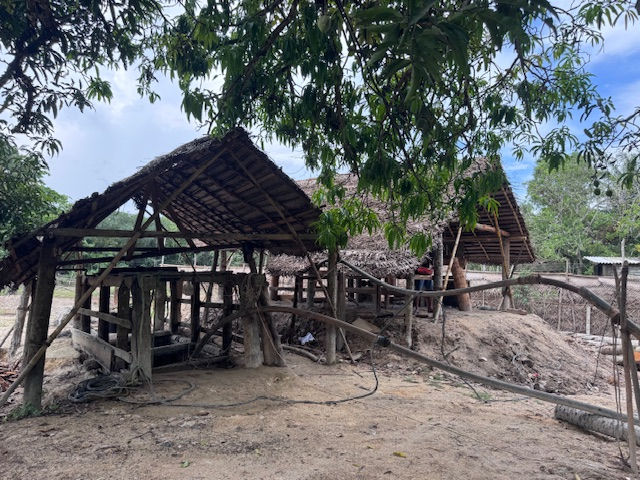
But mine visits also put the polished gemstone into perspective. A finished sapphire or garnet may look effortless sitting beneath jewellery-store lights. At the mine, you see the physical work, geological uncertainty and human judgement involved in finding it. You also realise just how little gem-quality material may emerge compared with the enormous amount of earth that has to be moved.
That's why I think understanding gemstone mining adds another dimension to appreciating a beautiful stone.
Exploring Gemstone Markets and Meeting Traders
Gem markets are completely different environments. This is where geology meets commerce.
Stones change hands. Prices are discussed. Parcels are examined. Brokers move between buyers and sellers. Decisions can be made remarkably quickly by people who have spent their lives handling gemstones.
For someone unfamiliar with the trade, it can initially feel chaotic. But spend enough time watching and patterns begin to emerge. You notice how stones are handled. How traders use light. Which characteristics immediately attract attention. When somebody loses interest. When negotiation starts. And how much of the business depends on long-established relationships.
This is also where you begin to understand an important truth about the gemstone trade:
two gemstones that look broadly similar can have very different values.
Colour, clarity, treatment, cut, origin, size and market demand all play a part, and small differences can sometimes mean substantial differences in price.

From Rough Gemstone to Cut Stone
One of my favourite parts of the gemstone journey happens after mining but before you ever see the finished gemstone. The cutting. A skilled gem cutter doesn't simply take a piece of rough and make it pretty.
Before making the first cut, they may need to consider inclusions, colour zoning, crystal orientation, potential yield, durability and where the strongest colour lies within the stone.
And every cut removes material permanently.
I've experienced this first-hand with stones I've bought myself. On one occasion, towards the end of a sourcing day, I bought a sapphire even though a cutter travelling with me had already pointed out the silk within it. It was my last buying opportunity and I allowed that sense of urgency to influence my decision. Later, another cutter advised me not to cut it.
It was a useful reminder that experience doesn't make anyone immune from the psychology of buying. Sometimes the most valuable gemstone decision is the decision to do nothing.
Can You Buy Gemstones on a Gemstone Tour?
If you want to, yes, but buying shouldn't be the measure of whether the experience has been worthwhile. There is enormous value simply in looking, asking questions and learning. If you do want to buy gemstones while travelling, understanding the market first can make a significant difference.
Buying at source doesn't automatically mean buying cheaply. It also doesn't automatically mean that every stone has a perfect provenance story simply because you're in the country where that type of gemstone is mined.
Gemstone markets can be complex. Stones travel between countries, treatments may need to be disclosed, prices are often negotiable, and sellers naturally have a commercial interest in making a sale. The more you understand before buying, the less likely you are to make a decision simply because the situation feels exciting. And believe me, gemstone markets can be very exciting.
What Makes a Good Gemstone Tour?
For me, a worthwhile gemstone experience needs more than a list of attractions.
Access matters. Meeting people who genuinely work in the gemstone trade creates a completely different experience from visiting somewhere designed primarily for tourists.
Independence matters. If the person guiding you earns commission from what you buy, you should know that. There is an important distinction between somebody helping you understand a gemstone and somebody whose income depends on selling it.
Flexibility matters. Gemstone mining and trading don't always conform to an itinerary. The ability to change plans when an interesting opportunity appears can make the difference between an ordinary trip and an exceptional one.
And finally, the people matter. The best gemstone experiences I've had have involved miners, cutters, traders and craftspeople being willing to share their knowledge. Those conversations stay with you.
Why Sri Lanka Is So Special for Gemstone Travel
Of all the gemstone-producing countries I have visited, Sri Lanka holds a particularly important place in my work. The island is famous for sapphires, but its gem trade encompasses an extraordinary variety of coloured gemstones and a network of miners, traders, cutters, heat-treatment specialists and craftspeople.
More importantly for the traveller, it is possible to experience several stages of the gemstone journey within one country. You can begin to understand mining, see how rough stones enter the market, spend time around traders and then follow gemstones through cutting, treatment and jewellery-making.
I have been returning to Sri Lanka for nearly a decade and have gradually built relationships with people throughout different parts of its gemstone community. Those relationships are now allowing me to offer something rather different.
Private Sri Lanka Gemstone Experiences
From November 2026, I will be hosting a limited number of private Sri Lanka Gemstone Experiences for individuals and couples. These aren't conventional group tours.
Each experience is designed for a maximum of two guests and shaped around their interests, whether that means learning more about mining, spending time with cutters, understanding gemstone markets, developing buying confidence or simply discovering what really happens behind the scenes of the trade.
I'm offering 3-day, 5-day, 7-day and 10-day options, but the experience itself is not built around ticking attractions off a list. It is built around access, learning and what is genuinely happening within the gem trade while you are there.
Mine visits, for example, depend on mining activity, weather, permissions and local conditions. I would much rather explain that honestly than promise a manufactured experience simply because it looks good on an itinerary. That unpredictability is part of what makes gemstone travel real.

Who Are Gemstone Tours For?
The people who get the most from gemstone travel tend simply to be curious.
You might be:
a gemstone or mineral collector
an aspiring gemmologist
a jewellery enthusiast
considering buying an important gemstone
interested in geology or mining
fascinated by craftsmanship
or simply someone who wants to understand where beautiful things really come from
You can arrive knowing very little about gemstones and leave seeing them completely differently. That's my wish for you.
Seeing Beyond the Finished Gemstone
Once you've stood beside a mine, watched a trader examine rough stones or listened to a cutter explain why they won't cut a particular sapphire, gemstones stop being anonymous objects.
You appreciate how many hands, skills and relationships may sit behind one apparently simple stone. And that, for me, is the real attraction of gemstone tours. Not treasure hunting.
Not simply buying gemstones more cheaply. But discovering the extraordinary world that exists before the sparkle.
If you would like to experience that world for yourself, you can explore my private Sri Lanka Gemstone Experiences and discover the different ways to join me behind the scenes of Sri Lanka's gemstone trade.
Kim Rix GG
Gemstone Detective